Bumpers Materials
Material information, with the boundary kept visible.
A product-level view of what is currently stated, what needs supplier documentation, and how international partners receive approved material information.
Raw material context
What natural rubber is
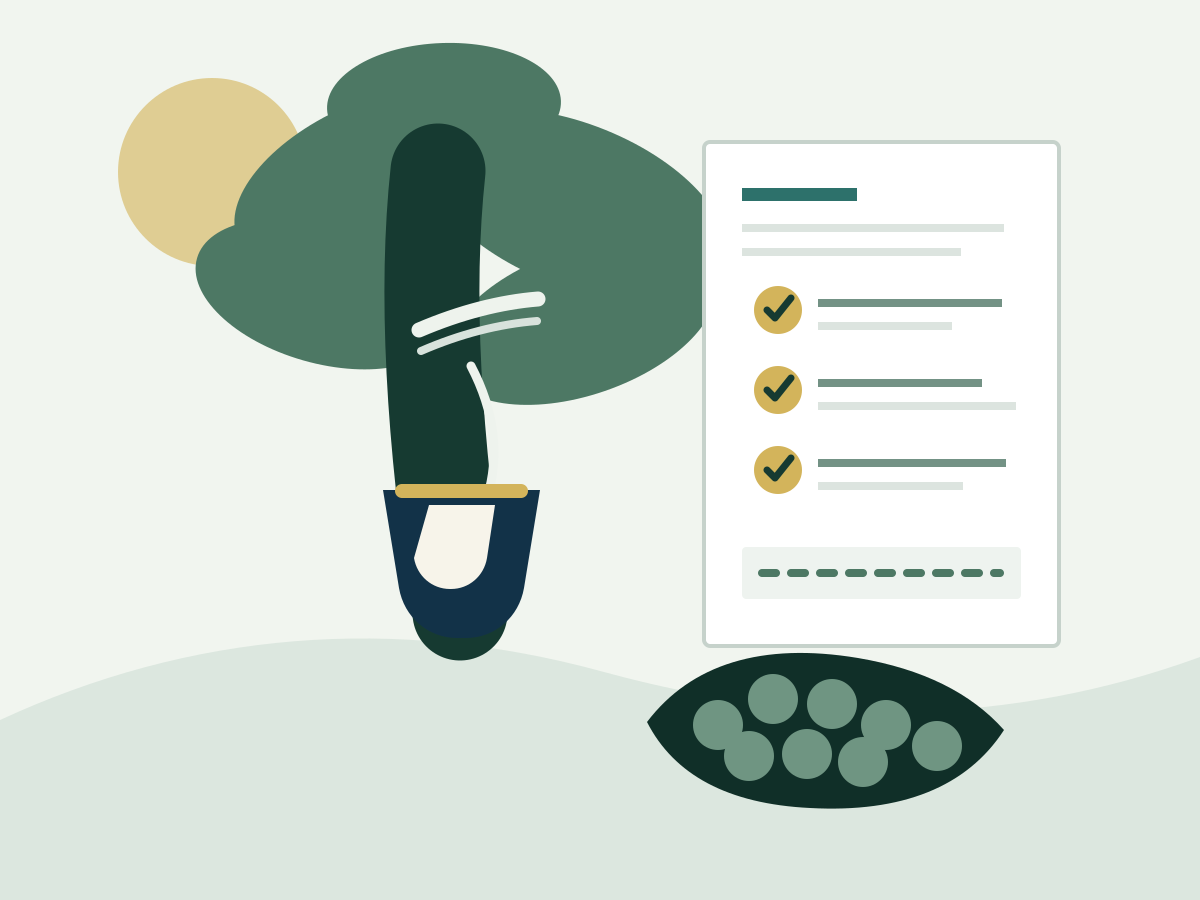
Natural rubber begins as latex collected from rubber trees. The raw material is then processed and compounded before it can become part of a finished footwear component.
A photograph or illustration of latex collection explains the raw-material context only. It does not identify a Bumpers farm, plantation, factory, supplier, or chain of custody unless separate documentation confirms that relationship.
Product-level evidence
From a raw material to a finished product
A raw-material description does not establish the composition of an entire sandal or insole. Straps, footbeds, soles, adhesives, dyes, coatings, processing aids, and packaging may have different material systems.
Bumpers is building model-and-component records so partners can distinguish a verified composition statement from a broad environmental impression.
- Qualified public statements
- 1
- Held for documentation
- 3
- Review model
- Product and component specific
Claim boundaries
What the current public materials story does not assume
- Natural rubber wording remains model- and component-specific.
- Vegan wording requires documentation across every included component and processing aid.
- Recycled-content wording requires the component, percentage, calculation method, and evidence.
- Environmental process language requires a defined factory, process boundary, measure, and review period.
- No complete-product biodegradability or certification claim is currently approved for publication.
Care and use
Care, durability, and use
Care instructions, expected service conditions, compatibility, and disposal guidance should be confirmed for each model. Durability depends on product construction, use, storage, climate, and care rather than a single raw material.
Current model-specific care and packaging information is supplied through approved business documentation when available.
Partner documentation
A controlled path from evidence to market copy
- 01
Identify the exact model, component, territory, channel, and proposed claim.
- 02
Match the claim to a current bill of materials, supplier declaration, test, certificate, or process record.
- 03
Record the evidence date, scope, owner, publication permission, and legal-review status.
- 04
Localize only the approved wording and keep the same claim boundary across channels.
- 05
Review the evidence whenever the model, supplier, material, process, packaging, or regulation changes.
