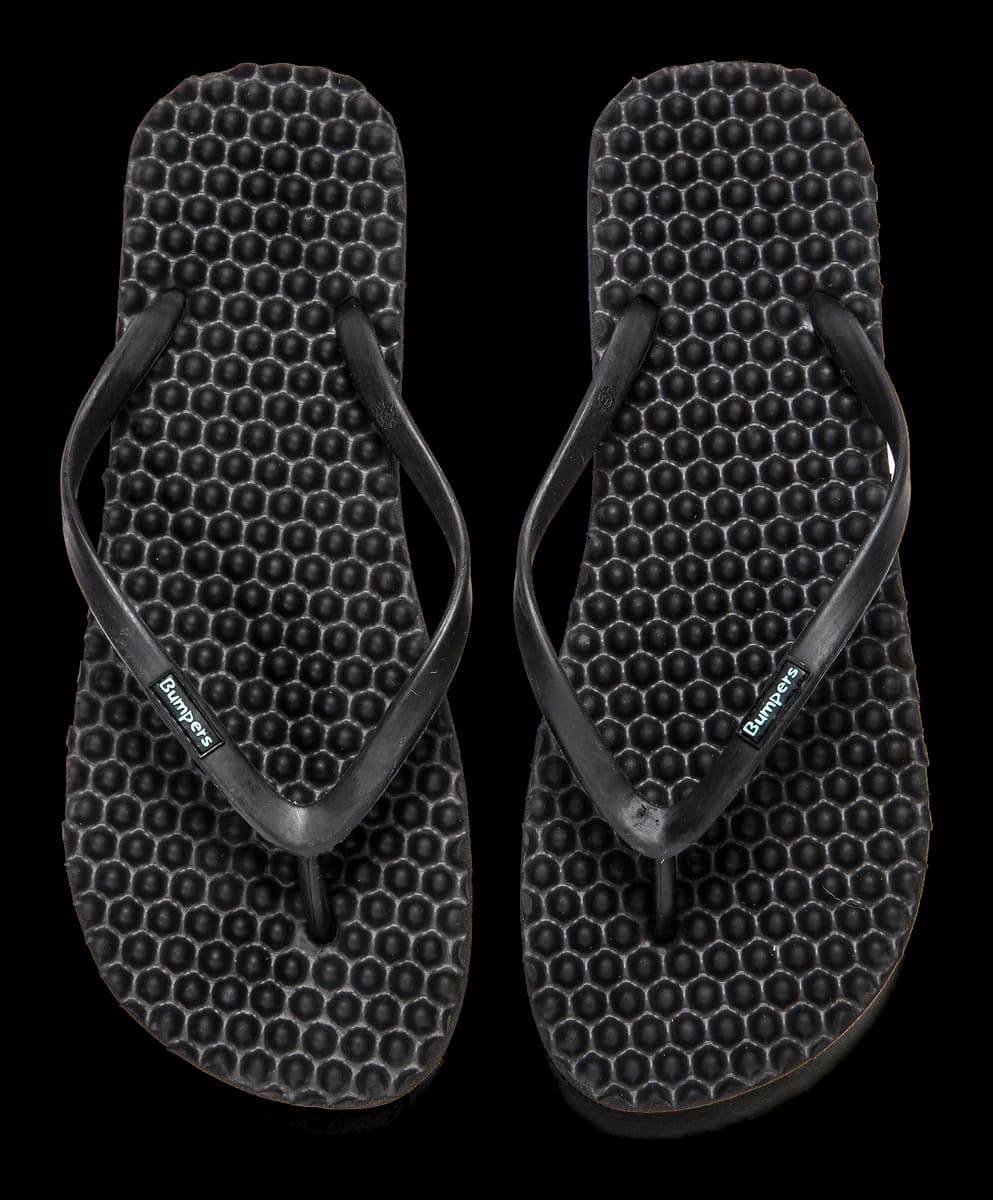
Start with what is physically present
A textured footbed can be described without a theory about the body. The most reliable starting point is the product itself: the shape, density, height, material, flexibility, and placement of the texture, along with the intended footwear format.
For Bumpers, the visible feature is a field of rounded textures across the footbed. Those textures create repeated contact and a noticeable tactile sensation. Calling that experience "massage-inspired" communicates the design direction while leaving room for individual preference.
Sensation is personal
People differ in sensitivity, fit, prior footwear habits, and comfort preferences. One person may enjoy a pronounced texture immediately; another may prefer shorter periods of use or a different format. A third may decide that textured footwear is not suitable for them.
Responsible product information should make that variation visible. It should not suggest that discomfort is proof that a product is "working," and it should not pressure a customer to continue using footwear that feels unsuitable.
Avoid the medical shortcut
Claims about circulation, posture correction, hormone balance, natural healing, pain relief, or named conditions change the nature of the message. They are objective health claims that require appropriate evidence and legal review. A disclaimer at the bottom of the page does not automatically repair a strong treatment message at the top.
Visuals matter too. Organ maps, clinical imagery, white coats, before-and-after stories, and disease-focused testimonials can imply medical efficacy even when the exact words are absent. The net impression is what counts.
A practical language framework
Safer descriptions stay close to design and experience:
- A distinctive textured footbed
- Rounded underfoot textures
- A noticeable tactile sensation
- Massage-inspired underfoot texture
- Designed for everyday comfort
- Individual preferences and experiences vary
Avoid words such as "cure," "treat," "heal," "clinically proven," "medical-grade," and "doctor recommended" unless a specific claim has adequate evidence and formal approval.
Give clear context
Customers should understand that the product is consumer footwear, not a medical device. People with medical conditions, reduced sensation, injury, or uncertainty about footwear suitability should be directed to an appropriate qualified professional.
This approach is not less interesting. It is more durable. It lets the physical product carry the story and gives retailers, creators, and customers language they can trust.
Read the full consumer guidance: Wellness and Medical Disclaimer.